


I’ve been involved in the biohacking and longevity communities for nearly a decade, and I’m often disappointed with what’s in the hype cycle, the limited views people take on longevity today, while they hold out for some mythical, magical future.
The Hype
What’s your biological age: I too bought into the idea that we could measure biological age through alternative “clocks” that measure a genetics or other biomarkers . If we can understand what cell aging looks like, we can directly measure the impacts of our longevity protocols. It’s an amazing promise, and from a scientific perspective, this is exactly how they are meant to be used. Take a population, provide them with a protocol, and measure the effects on the cells.
However, the clocks were not designed to measure how old “your” cells are. They were designed to be used on a population level, not an individual. For example, how smokers lungs age faster than non-smokers, but you can’t look at a single smoker and judge the health of . We can feed the data into a biological clock and get the result. Take a single individual and feed in their data, it will spit out one age now, and a different age a few minutes later. Amazing science misused as marketing hype. (Dr Matt Kaeberlein has a great video where he compares biological age tests)
Supplement Stacking: The science is clear. There isn’t a single supplement that increases longevity. Where supplements can help is to regulate stress, or improve your ability to work-out, potentially recover quicker. This is supplementation improving physical fitness, but really, how much improvement is there. Maybe 1-2%. The jury is mostly out, nothing has been proven to be very effective.
The three core levers of health are diet, exercise, and sleep. Supplements don’t improve your diet, and the latest hype in pro-biotics can be included here. They can have a small improvement in how intense your exercise can be, or improve recovery. In sleep, though some people say they benefit from magnesium, or glycine, these are not necessary if you are eating a healthy diet, and melatonin has been shown to have only a minor improvement in sleep-onset.
The hype around supplements is so large that studies have found less than 40% of supplements tested contained ANY of the DNA of the promised ingredient[1]. Included in this study were simple, available ingredients like cinnamon, tumeric, and ginger! This isn’t mystery medicine, it’s mirage.

Potential Promise: Metformin and Rapamycin continue to be the perpetual promises in the hype cycle. Over a decade we’ve looked at the potential these chemicals could have in extending life, but there has not yet been a single conclusive study that shows effectiveness.
Sadly, Metformin has been shown to blunt the benefits of exercise. Literally negating one of the greatest longevity levers we have. Rapamycin is backed up only by mouse-data, with potentially dangerous real-world side-effects. Even Bryan Johnson removed Rapamycin from his personal protocol due to the risks and lack of evidence.
GLP1s Real Solution + Hype: There is no doubt that GLP1s are amazing and are helping hundreds of millions of people, as well as becoming a pop culture phenomenon with names like Ozempic becoming a brand name as popular as Chanel, or Nike. So how dare I list them as hype? Well, you can’t look at any media these days without hearing about GLP1s and the next future versions acting on the same pathways. GLP1s are helping people to live longer, but they are solving a problem we ourselves created. They’re extending the lives we’ve shortened through sedentary lifestyle and processed foods. We set off a metabolic bombshell and GLP1s are the clean-up crew. We treat GLP1s with a generic, take as much as your body can handle. But the missing piece is that GLP1s are most beneficial when timed appropriately. This is a much larger topic around timing and dosage that I’ll be covering in a future post (don’t forget to subscribe), but there is also a way to manage the proper timing of GLP1s, coming up later in this post. Read-on.
Other Peptides : The success of GLP1s and popularity due to the weight loss effect has brought with it a wave of other peptides promising magical results. However, most of these peptides are currently light on evidence of effectiveness in humans. It is likely that some of these peptides will prove effective, some won’t, and like GLP1s and insulin (also a peptide), some will be effective in people who have diseases which are life threatening already. They are firmly in the hype cycle at the moment with Peptide Parties becoming the Tupperware Parties of the mid-2020s.
The Hope
The highly public and future potential in longevity rests on the idea that if we stop cells from aging, we’ll stay young forever. The hope is that by either stopping cell age, or turning our cells back to younger versions of themselves, we’ll be younger versions of ourselves, or at least return to the function of our younger selves.
Previously telomere lengthening was the golden child of this space. If we can just stop telomere’s from fraying or lengthen them after they have been shortened, the DNA will be better protected and we can live forever. Unfortunately, it seems most telomere research is now on hold. The risk profile of introducing cancer into the body was too great.
Then came stem-cells. If we just inject stem-cells into the body and turn them into the cells we want, we can just always update our hardware.
But thus far, stem-cells also haven’t turned out as promised, or are still in the pre-clinical phase, aside from a few instances where stem-cells are treating physical injuries.
Currently, the most promising area in bringing youth back to cells is through genetic re-programming. Altos Labs is in the discovery phase of how they can use Yamanka Factors to bring a cell back to it’s former highly functional un-aged state. As Hal Baron, CEO of Altos Labs states “[I]t may, one day, be possible to transform patients’ lives by reversing disease, injury and the disabilities that can occur throughout life.”
NewLimit is at a similar stage, and are focused on “restoring youthful function in the aging liver, immune, and vascular systems”. They describe their “20-year ambition is to significantly extend human healthspan”.
The Hidden Now
In any discussion on health and longevity, we will always hear the three pillars are diet, exercise, and sleep. What is mentioned less often is that the Neural Function of Sleep is a key driver of metabolic health, as well as impacting our ability to exercise and recover from exercise. Without sleep, the other two pillars can’t stand on their own.
Unfortunately, like our cells, the Neural Function of Sleep naturally declines with age. This isn’t sleep time, but the foundational processes that make sleep revitalizing. The emerging consensus is that the decline in the brain’s ability to repair during sleep is a vicious cycle which begins with impaired glymphatic flush. As metabolic waste gathers in the brain, the brain’s ability to remove new metabolic waste is impaired. This leads to more build-up, which further impairs removal. The grey matter atrophies and we see a decline in the size of grey matter itself.
But this challenge extends far outside the brain. This same vital processes of clearing the brain of waste are also involved in our daily metabolic health, and disrupting this activity reduces insulin response and delays GLP1 activity. Disrupting this activity reduces insulin response and delays GLP-1 activity, creating a biological ‘lag’ where your brain misses the signal to stop eating until it’s too late. By the time the signal arrives, you’ve already over-consumed.
In the exercise realm, 70% of growth hormone is released during the initial neural flush of slow-wave sleep. The impaired Neural Function which accompanies age is linked to our inability to recover well from exercise. Not only are we less able to recover, but the ability to push ourselves wile exercising is also impaired through our nervous system which creates the sensation of weakness resulting in the inability to recruit muscle activity and push our bodies to the required levels.
Cardiovascular health also suffers as blood pressure remains high, or in the worst cases actually increases. This leads to hypertension and coronary issues driven by total systemic inflexibility. In a healthy state, your arteries require the “dip” of deep sleep to maintain elasticity. Without it, they become stiff and lose their ability to adapt. This is a direct precursor to stroke and heart failure.
These failures in our metabolic, cardiovascular, and physical systems share a common origin in the degradation of our Neural Function of Sleep. A singular system with massive downstream affects.
For the past 5 and a half years, we’ve been developing technology to enhance the Neural Function of Sleep. This builds on a foundation of research in slow-wave enhancement which has shown that we can increase and measure a direct response in neural slow-wave function, and link this brain activity to improvements in glymphatic clearance[2], cardiovascular response[3,4], improve the markers of immune function[5].
Many studies are still underway, and some are focused on the potential in Alzheimer’s prevention or management of symptoms. Though what I find most interesting is if we can boost Neural Function prior to it’s natural decline can we slow or completely arrest the rate of decline?
If this were to happen, would we resolve many of the cardiovascular, metabolic, and cognitive issues which arise as we age? Can the beneficial results of exercise be maintained deep into old-age without adding exogenous hormones, peptides, or pharmaceuticals?
It would be naive not to address the fact that researchers struggled with getting the technology working consistently across subjects reliably. Our patent-pending Ultrasleep™ neurostimulation is designed to overcome these challenges faced in the research, and we previously wrote about how the challenges researchers had helped guide us to new methods of implementing our capabilities.
This isn’t a future hope that maybe this technology will work one day. We have developed the technology and had independent researchers validate our capabilities and now using Affectable Sleep in their own clinical trial. This is a product you can order today, and with shipments of initial units expected towards the end of Q2 2026.
Most people look at the work we are doing at Affectable Sleep as a means to help them get the revitalizing benefits of sleep without increasing sleep time. We are building for optimal function tomorrow, but we don’t lose sight of the fact that we believe we can have a greater impact on all the tomorrows that follow.
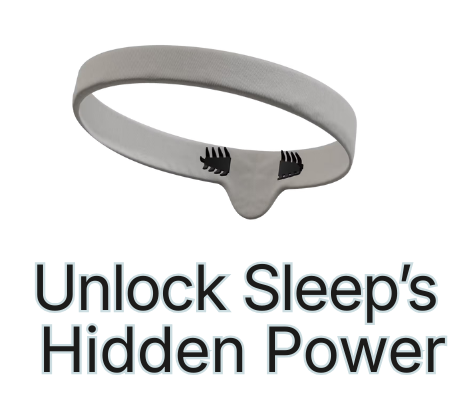
Here at Affectable Sleep, we focus on enhancing the vital processes that happen during sleep that support your brain and body to function on the daily. We’ve spent the last 5 years developing neurotechnology to enhance Sleep’s Neural Function without altering sleep time. Affectable Sleep is pioneering a new type of wearable, that goes beyond harvesting our data and showing us pretty graphs, to directly affecting our biology, physiology, and neurophysiology to improve our health in real-time.
Learn more at our website and follow our thinking and research on Linkedin